




Ioannina Castle is not a conventional archaeological site that you enter, tour and leave. It is a living neighbourhood, with homes, narrow streets, religious monuments, museums and two historic citadels enclosed by its fortified walls.
The castle is one of the most important places to visit in Ioannina, but its layout can initially be confusing. Some monuments are freely accessible, several buildings can only be viewed from outside, and the main museums operate independently with different tickets and opening hours.
Allow at least two hours for a basic walk. If you want to visit two or three museums, explore both citadels and stop for photographs, the castle can easily occupy half a day.
This Ioannina Castle guide explains what to see, which museums are most worthwhile and how to organise your visit without unnecessary backtracking.
Ioannina Castle at a Glance
The essential information for exploring the castle’s two citadels, museums, Ottoman monuments and inhabited historic neighbourhood.
Ioannina Castle remains a living neighbourhood. Its houses, museums, mosques and historic buildings are spread between two separate citadels rather than enclosed within one visitor attraction.
Allow two hours for the outdoor sights or half a day if you plan to visit two or three museums.
Walking through the residential neighbourhood and public outdoor areas is free. Each museum has a separate ticket.
Visit Aslan Pasha Mosque in the northeastern citadel and Its Kale, Fethiye Mosque and Ali Pasha’s tomb in the southeast.
The strongest all-round museum experience explains the craft that became closely associated with Ioannina and the wider Epirus region.
Morning provides the most reliable museum access. Avoid Tuesday if the Byzantine and Silversmithing museums are priorities.
Continue along the lakefront or take the short boat journey to Ioannina Island after exploring the castle.
Explore both citadels rather than visiting only Its Kale. Start at Aslan Pasha Mosque, walk through the inhabited castle neighbourhood and finish at Its Kale and the Silversmithing Museum.
Why Ioannina Castle Is Different
Many Greek castles survive primarily as ruins. Ioannina Castle remains part of the modern city.
People still live within its walls, cars use some of its narrow streets, and everyday houses stand beside mosques, Byzantine remains and former Ottoman buildings. This gives the area a more natural atmosphere than a carefully reconstructed historic attraction, but it also means that not every old building is open to visitors.
The fortified site has origins in the Byzantine period, although much of what travellers see today reflects later alterations. Ioannina’s Ottoman history is particularly visible, especially through the buildings associated with Aslan Pasha and Ali Pasha.
The castle also reflects the communities that shaped the city. Christian, Muslim and Jewish history can be found within a relatively compact area, although understanding these layers requires more than simply walking around the walls.
Understanding the Castle’s Layout
Ioannina Castle contains two principal citadels.
The northeastern citadel is dominated by the Aslan Pasha Mosque, which now houses the Municipal Ethnographic Museum. Its elevated position also offers some of the castle’s best views towards Lake Pamvotida.
The southeastern citadel is known as Its Kale, meaning the inner fortress. This was closely associated with Ali Pasha’s court and now contains the Byzantine Museum, Fethiye Mosque, Ali Pasha’s tomb and the Silversmithing Museum.
Between the two citadels is the inhabited castle neighbourhood. Its lanes contain houses, small churches, former Ottoman structures and the Old Synagogue of Ioannina.
You do not need a complicated map to explore the area, but it helps to visit one citadel at a time rather than moving repeatedly between them.
What to See Inside Ioannina Castle
The Main Castle Gate
The monumental gate provides the natural starting point for a first visit. Once inside, the city noise quickly recedes and the road separates into smaller residential lanes.
Pause after entering to look at the construction of the walls and the relationship between the gate and the surrounding neighbourhood. The castle makes more sense when approached as a fortified district rather than as a single monument.
From here, you can walk first towards the northeastern citadel and Aslan Pasha Mosque before continuing through the residential quarter to Its Kale.
The Inhabited Castle Neighbourhood
The streets between the two citadels are an important part of the visit. Traditional houses stand alongside later buildings, small courtyards and traces of the castle’s Ottoman infrastructure.
The area is generally quiet during the morning, although vehicles still pass through some streets. These are residential lanes rather than pedestrian-only museum grounds, so remain aware of local traffic and respect private homes.
Do not rush directly from one museum to another. Some of the castle’s most characteristic photographs come from the contrast between stone walls, tiled roofs, narrow streets and glimpses of the lake.
The Old Synagogue of Ioannina
The Old Synagogue, known as Kahal Kadosh Yashan, represents the city’s historic Romaniote Jewish community.
Romaniote Judaism developed in Greece independently of the larger Sephardic communities associated with cities such as Thessaloniki. Ioannina became one of its most significant centres.
The synagogue is not normally an attraction where travellers can simply arrive and enter at any time. Access may require advance arrangements or coincide with organised visits and religious occasions. Even when the interior is unavailable, its presence is essential to understanding the castle as a district once shared by different communities.
A future guide to Jewish Ioannina should cover the synagogue, former Jewish neighbourhoods, Holocaust memorial and surviving community in greater depth.
Soufari Saray and the Ottoman Buildings
Soufari Saray was constructed during the period of Ali Pasha and functioned as a cavalry school. Its large scale makes it one of the castle’s more imposing surviving buildings, although it is not always accessible as a conventional visitor attraction.
Nearby Ottoman structures include a former bathhouse, library and other buildings connected with the religious and administrative life of the castle.
Some are better preserved than others, and several are mainly viewed from outside. Together, however, they show that the castle was once a functioning political, military and residential centre rather than simply a defensive enclosure.
Aslan Pasha Mosque and the Municipal Ethnographic Museum
Aslan Pasha Mosque stands on the northeastern citadel and is among the most recognisable monuments inside Ioannina Castle.
The mosque was constructed in the early 17th century as part of a wider religious and educational complex. Today, it houses the Municipal Ethnographic Museum.
Its collections represent the Christian, Jewish and Muslim communities of Ioannina through clothing, religious objects, textiles, jewellery, books, household items and decorative arts.
The museum is relatively compact. Allow approximately 30 to 45 minutes inside, followed by time to explore the grounds and enjoy the views towards the lake.
This is the best castle museum for travellers primarily interested in Ioannina’s multicultural identity.
Its Kale
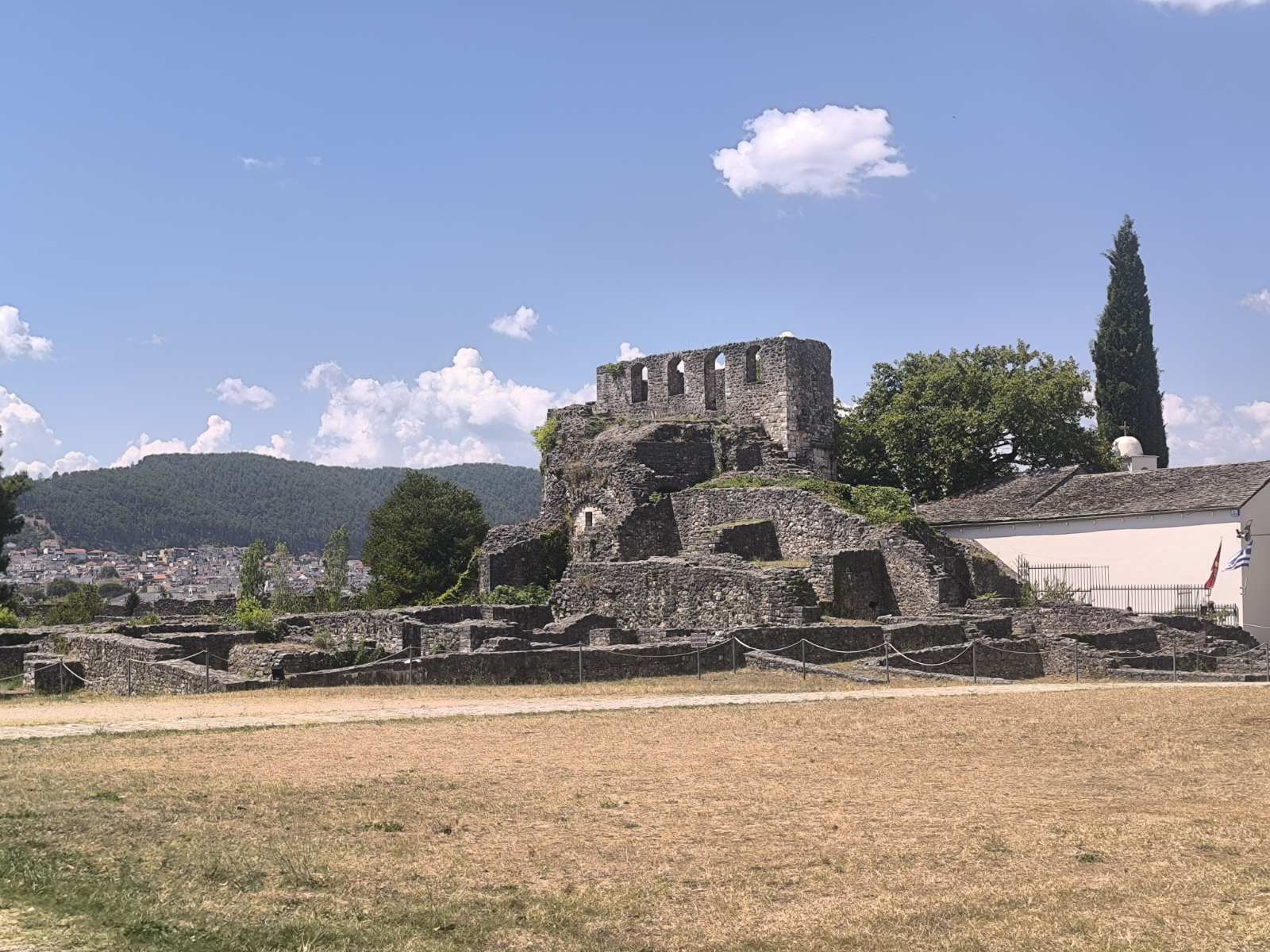
Its Kale is the castle’s southeastern citadel and the section most closely connected with Ali Pasha.
Ali Pasha’s palace once occupied this fortified enclosure, but only parts of the wider complex survive. The open grounds now contain museums, ruins, religious monuments and reconstructed or repurposed buildings from different periods.
The space is easier to understand when you remember that it was once a seat of power rather than an isolated fortress. Ali Pasha governed a large semi-autonomous territory from Ioannina, and his court transformed the city politically, economically and architecturally.
Its Kale also offers attractive views across the castle roofs and towards Lake Pamvotida.
Allow at least 90 minutes for Its Kale if you want to see the Byzantine Museum, Fethiye Mosque, Ali Pasha’s tomb and the main viewpoints. With the Silversmithing Museum included, two to three hours is more realistic.
Read the full Guide on Its Kale Ioannina
The Byzantine Museum of Ioannina
The Byzantine Museum occupies a building constructed over part of the former palace complex of Ali Pasha.
Its collection covers the Byzantine and post-Byzantine history of Epirus through icons, sculpture, ceramics, manuscripts and religious objects. Additional displays within the wider complex connect the museum with the Fethiye Mosque and other buildings in the citadel.
This is the most useful museum for travellers who want to place Ioannina within the broader history of Epirus rather than concentrating only on the Ottoman period.
Allow approximately 45 to 60 minutes, although visitors with a strong interest in Byzantine art may need longer.
As of August 2026, the Byzantine Museum is generally open from 08:00 to 20:00 from 1 April to 31 October, and from 08:30 to 15:30 from 1 November to 31 March. It is closed on Tuesdays. Standard admission is €5, although opening hours and ticket arrangements can change, so it is worth checking before a visit.
As explained in our detailed guide to Its Kale, also look for the Treasury, which you can visit with the same ticket.
Fethiye Mosque and Ali Pasha’s Tomb
The Fethiye Mosque stands at the southeastern edge of Its Kale, close to the tomb of Ali Pasha. The present structure dates mainly from the late Ottoman period and occupies one of the most historically charged points inside the citadel. Ali Pasha was killed on the island of Lake Pamvotida in 1822; his body was buried here, while his head was sent to Constantinople.
The mosque is associated with Ali Pasha’s palace complex and took its present form during his rule. Beside it stands the tomb of Ali Pasha, protected by an elaborate metal enclosure.
After Ali Pasha was killed on Ioannina Island in 1822, his body was buried here while his head was taken to Constantinople. The site therefore connects two of the city’s main visitor areas: the castle, where he ruled, and the island, where he died.
The mosque exterior, tomb and surrounding views make this one of the essential stops inside Ioannina Castle. Interior access may depend on the operation of the Byzantine Museum complex.
The Silversmithing Museum
The Silversmithing Museum offers the most polished and visitor-friendly museum experience inside the castle. It occupies the restored western bastion of Its Kale and adjoining former cookhouses, so the historic structure itself becomes part of the visit.
It explains the techniques, tools and social history behind the silverwork for which Ioannina and the wider region of Epirus became known. Displays include jewellery, weapons, household objects and decorative pieces, along with multimedia presentations showing how traditional items were produced.
The museum is located inside a restored section of the Its Kale fortifications, making the building itself part of the experience.
Allow at least one hour. If you only have time for one paid museum inside Ioannina Castle, this is the strongest general choice, particularly for visitors interested in craftsmanship, design and local identity.
There is also a small café/canteen at the museum, which makes Its Kale a convenient place to stop for coffee during a longer exploration of the castle.
A Practical Walking Route Through Ioannina Castle
Begin at the main castle gate and follow the lanes towards the northeastern citadel.
Visit Aslan Pasha Mosque and the Municipal Ethnographic Museum first. Walk around the elevated grounds before returning through the residential section of the castle.
Continue past the Old Synagogue and the surviving Ottoman buildings towards Its Kale. Inside the citadel, visit the Byzantine Museum, Fethiye Mosque and Ali Pasha’s tomb.
Finish at the Silversmithing Museum. From there, leave the castle and continue towards the Lake Pamvotida promenade or the boat departure point for Ioannina Island.
The complete route requires approximately two hours without museum interiors. With the Municipal Ethnographic Museum, Byzantine Museum and Silversmithing Museum included, allow at least four hours.
Which Castle Museum Should You Choose?
You do not necessarily need to visit all three major museums during one trip.
- Choose the Silversmithing Museum for the strongest overall visitor experience and a subject closely connected with Ioannina’s identity.
- Choose the Byzantine Museum if you are particularly interested in religious art, Byzantine Epirus and the historical development of the region.
- Choose the Municipal Ethnographic Museum for an introduction to the Christian, Jewish and Muslim communities that lived in Ioannina.
For most first-time visitors, the Silversmithing Museum combined with the Municipal Ethnographic Museum provides a good balance without making the day feel overly museum-heavy.
Opening Hours and Admission
Walking through the inhabited castle neighbourhood does not require an entrance ticket. Each museum has its own admission charge and timetable.
As of August 2026:
- The Silversmithing Museum charges €8 for standard admission. It is generally open from 10:00 to 18:00 between March and mid-October and until 17:00 during the remainder of the year. It is closed on Tuesdays.
- The Byzantine Museum charges €5. Published hours are longer during the April-to-October period and shorter in winter. It is closed on Tuesdays. The ticket is also used for the Treasury and Fethiye Mosque
- The Municipal Ethnographic Museum charges €2 and currently opens daily, with shorter weekend hours.
Opening times, holiday closures and admission prices can change. Check the current museum schedules before visiting, especially outside the main travel season.
Best Time to Visit Ioannina Castle
Morning is the most practical time because the museums are open and the residential streets are usually quieter.
Late afternoon is better for photography, particularly around Its Kale and the lake-facing sections of the castle. However, leaving the visit too late may mean missing museum interiors.
Summer afternoons can feel hot in the exposed citadels, despite Ioannina’s generally cooler climate compared with southern Greece. In winter, rain and damp cobblestones are common, but the museums make the castle a good option during unsettled weather.
Avoid Tuesday if museums are an important part of your visit, as both the Byzantine and Silversmithing museums are normally closed.
How to Reach the Castle
Ioannina Castle stands beside Lake Pamvotida and is within easy walking distance of the modern city centre.
The main gate can be reached in approximately 10 to 15 minutes from the central pedestrian streets, depending on your starting point. The lakefront and island boat departure area are even closer.
If you are driving, it is usually easier to park outside the walls and explore on foot. Parking near the castle and lake becomes more difficult during weekends, holidays and busy evening periods.
Driving through the narrow residential streets adds little to the visit and may leave you searching for limited parking inside the walls.
Accessibility
The castle is largely explored on foot over paved lanes and uneven historic surfaces. Some areas are easier than others for travellers with reduced mobility. The Silversmithing Museum is one of the more accessible attractions within the complex, with lift access and adapted visitor facilities, but the wider castle should not be treated as completely step-free.
The Silversmithing Museum provides accessible facilities, including a lift, accessible toilets and wheelchair support. The Byzantine Museum also lists accessibility provisions, but the route between monuments remains uneven in places.
Families using pushchairs should expect cobbles and occasional steps. A lightweight pushchair is more practical than a heavy travel system.
Visiting Ioannina Castle with Children
The open citadels and fortified walls can make the castle more engaging for children than a traditional indoor historical site.
The Silversmithing Museum is the strongest museum choice for families because its displays explain how objects were made and include visual and interactive elements. The short walk between buildings also allows families to adjust the visit according to children’s energy levels.
There are drops, uneven surfaces and occasional vehicles within the residential streets, so younger children require supervision.
A castle visit combines particularly well with a boat ride to Ioannina Island or a carriage ride beside the lake.
What to Combine with Ioannina Castle
The easiest combination is the Lake Pamvotida promenade. After leaving the castle, walk beside the lake or stop at one of the nearby cafés.
You can also take the short boat journey to Ioannina Island. Visiting both areas on the same day creates a clear historical connection between Ali Pasha’s seat of power in Its Kale and the place where he spent his final days.
Another option is to continue into central Ioannina for lunch, shopping and the Archaeological Museum. Travellers with only one day in the city should visit the castle in the morning and the island during the afternoon.
Common Mistakes When Visiting the Castle
The most common mistake is treating Ioannina Castle as a single monument that can be seen in 30 minutes.
Another is arriving on Tuesday and discovering that the two principal museums are closed. Travellers also underestimate the time required to explore both citadels, especially when museum visits are included.
Do not expect every historical building to be open. Several structures are functioning buildings, undergoing conservation or visible only from outside.
Finally, avoid concentrating only on Its Kale. The Aslan Pasha complex, residential streets and Jewish heritage of the northern section are essential to understanding the castle as a whole.
Ioannina Castle FAQ
Practical answers about admission, opening days, museums, accessibility and how much time to allow inside Ioannina Castle.
01 Is Ioannina Castle free to visit?
Walking through the inhabited castle neighbourhood and its public outdoor areas is free. The museums inside the castle charge separate admission fees.
02 How long do you need at Ioannina Castle?
Allow approximately two hours for the main outdoor sights. A visit lasting three to four hours is more realistic if you want to explore both citadels and enter two or three museums.
03 What can you see inside Ioannina Castle?
The castle contains two historic citadels, museums, mosques, Ali Pasha’s tomb, the Old Synagogue, former Ottoman buildings, churches and an inhabited residential neighbourhood.
04 Which is the best museum inside Ioannina Castle?
The Silversmithing Museum offers the strongest general visitor experience. Choose the Byzantine Museum for regional history and religious art, or the Municipal Ethnographic Museum for Ioannina’s Christian, Jewish and Muslim heritage.
05 What is Its Kale?
Its Kale is the southeastern citadel of Ioannina Castle. It was closely associated with Ali Pasha’s palace and now contains the Byzantine Museum, Fethiye Mosque, Ali Pasha’s tomb and the Silversmithing Museum.
06 Can you visit Ioannina Castle on Tuesday?
Yes, the residential neighbourhood and public outdoor areas remain accessible. However, the Byzantine Museum and Silversmithing Museum are normally closed on Tuesdays.
07 Is Ioannina Castle accessible?
Some museums provide accessible facilities, but cobbled streets, slopes and uneven outdoor surfaces can make parts of the castle difficult for travellers with reduced mobility.
08 Is Ioannina Castle suitable for children?
Yes. The open citadels and Silversmithing Museum can be engaging for families. Younger children need supervision around uneven surfaces, slopes and streets shared with local vehicles.
09 Where should you park for Ioannina Castle?
It is usually easier to park outside the castle walls near the lake or city centre and enter on foot. Parking becomes more difficult during weekends, holidays and busy evening periods.
10 Can you visit Ioannina Castle and the island on the same day?
Yes. Visit the castle during the morning and take the short boat journey to Ioannina Island in the afternoon. The two locations are closely connected through the history of Ali Pasha.
Museum hours and admission fees may change seasonally. Check the current schedules before visiting, particularly during winter and around public holidays.
Is Ioannina Castle Worth Visiting?
Yes. Ioannina Castle is one of the city’s essential sights, but it is best treated as a historic neighbourhood rather than a single attraction.
Its Kale contains the greatest concentration of major monuments, while the Aslan Pasha citadel gives a different perspective on the city’s Ottoman, Jewish and multicultural past. The museums add depth, but even travellers who do not visit every exhibition can enjoy the lanes, lake views and surviving architecture.
For most visitors, two to three hours is enough for the main highlights. Allow longer if you plan to visit both the Byzantine Museum and the Silversmithing Museum.
If you are planning a first visit to Ioannina, the castle should sit alongside Lake Pamvotida and the island as one of the places that helps explain the city rather than simply showing it.

